How the LinkedIn algorithm decides who sees your post in 2026
Direct answer: the LinkedIn feed in 2026 ranks your post on three things it can measure in the first hours — whether people in a small initial test group stop to read it (dwell time), whether they respond with meaningful comments rather than passive likes, and whether the conversation keeps going after you reply. Posts that win that early test get distributed in widening waves; posts that lose it quietly stop being shown. Everything practical in this guide follows from those three signals.
How distribution actually works: the test-batch model
LinkedIn does not show your post to all of your followers at once. It shows it to an initial slice of your network first and watches what happens. LinkedIn's own engineering blog has described the feed as a multi-stage ranking system that predicts the probability of engagement for each viewer, and creators consistently observe the same pattern from the outside: an early window in which a post either earns wider distribution or stalls.
That has one very practical implication. Your post is not competing against every post on LinkedIn — it is competing for the attention of the specific people who see it first. If your first hundred viewers scroll past, the algorithm concludes the rest of your network would too.
The three signals that matter most
1. Dwell time
Dwell time is how long someone actually spends on your post — and LinkedIn has publicly confirmed it uses dwell time as a ranking signal (see their engineering post on feed ranking). It is the hardest signal to fake. A wall of text nobody expands is invisible; a post that makes people click “…see more” and stay for the payoff tells the feed this content holds attention.
- Write a first line that cannot be evaluated without reading the second one.
- Break paragraphs so the post reads in short beats — white space is a dwell-time tool.
- Put the payoff after the fold: the “…see more” click itself is evidence of interest.
2. Comments over reactions
Every public analysis of LinkedIn reach — and LinkedIn's own guidance to creators — points the same way: conversation is worth more than applause. A comment is a stronger prediction-of-engagement signal than a like, a thoughtful multi-word comment is stronger than “great post”, and a comment thread where the author replies is strongest of all, because it turns one piece of content into an ongoing conversation the feed can keep serving.
- End with one specific, answerable question — not “thoughts?”
- Reply to every early comment with a substantive reply, not a thank-you emoji.
- Replies re-enter your post into your commenters' networks — that's the compounding loop.
3. Early velocity
Because the test-batch happens right after publishing, the same post can perform completely differently at different times. Publishing when your audience is online is not superstition; it decides who is in your test batch. For most B2B audiences that means weekday mornings in your audience's timezone, but your own analytics beat any generic rule — check when your past winners went out.
What stopped working
- Engagement bait. “Comment YES if you agree” is explicitly down-ranked; LinkedIn has said so publicly since 2024.
- External links in the first line. Posts whose whole point is to leave LinkedIn tend to underperform; if you need a link, earn the reach first and add it in the comments or at the end.
- Reposting without a take. A bare reshare adds nothing the feed can rank; quote it and add your own position instead.
- Posting into a dead profile. Reach compounds with consistency — a profile that posts once a quarter starts every test from zero.
A practical pre-publish checklist
- Would a stranger stop at line one? If not, rewrite the hook.
- Does the post deliver one idea, not three? Split multi-idea drafts.
- Is there a specific question at the end that a reader can answer in one sentence?
- Are you free for the 90 minutes after publishing to reply to comments?
- Is the formatting scannable on mobile — short lines, no dense blocks?
Reach is not a lottery. It is a test you can study for.
FAQ
Does LinkedIn penalize AI-written posts?
There is no evidence of a blanket penalty for AI-assisted writing. What gets punished is what always got punished: generic content nobody engages with. AI that helps you say something specific in your voice performs; AI slop does not.
How many times per week should I post?
Consistency beats volume. Three strong posts a week outperform seven rushed ones, because each weak post trains your audience — and the feed — to skip you. Start with a cadence you can sustain.
Do hashtags still matter?
Barely. LinkedIn has deprioritized hashtags since it introduced keyword-based discovery. One or two topical hashtags are harmless; a wall of ten looks like 2019.
How long should a post be?
Long enough to earn the “…see more” click and deliver a complete idea — for most text posts that lands between 900 and 1,400 characters. Below that there is nothing to dwell on; far above it, completion rates fall.
If you want the mechanics handled for you — hooks tested against what already worked in your niche, drafts in your voice, and the golden-hour reply window scheduled around your day — that is exactly what inHype does.
Put this into practice on LinkedIn
inHype turns your expertise into scroll-stopping LinkedIn posts — hooks, drafts, scheduling and analytics in one place.
Get started freeRead more
30 LinkedIn Headline Examples That Get You Clicked (With Templates)
30 LinkedIn headline examples for founders, job seekers, freelancers, and sales — plus the 4-part formula, fill-in templates, and before/after rewrites.
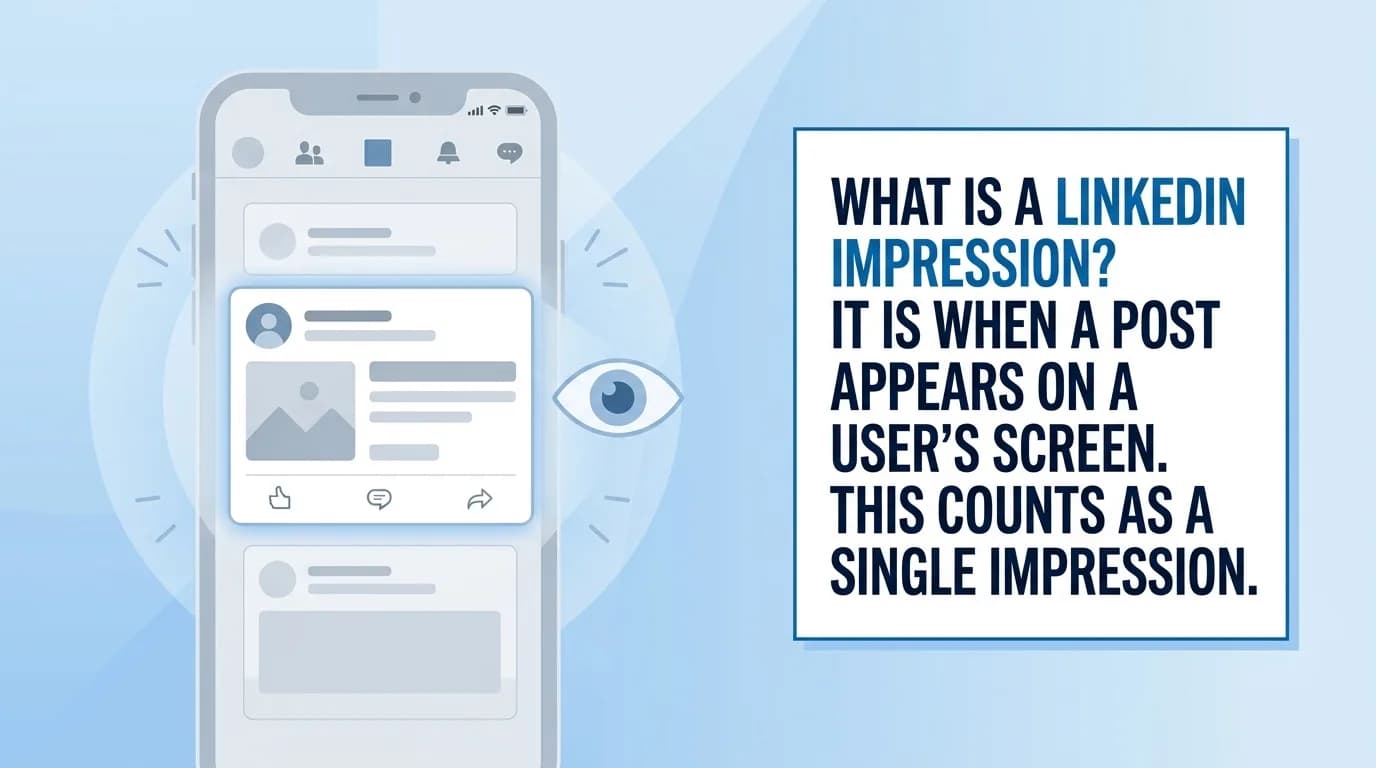
What Is a LinkedIn Impression? (And Why Yours Dropped)
What LinkedIn impressions actually count, impressions vs. reach vs. views, what a good number looks like, why yours dropped, and 7 ways to get more.

LinkedIn Post Formatting: How to Bold Text, Add Line Breaks, and Write Posts People Actually Read
How to bold text in a LinkedIn post (the Unicode workaround and its catch), plus the formatting rules — hooks, line breaks, white space — that drive reach.