12 LinkedIn Outreach Message Templates That Actually Get Replies
Most LinkedIn outreach dies in the first sentence. "I hope this message finds you well" tells the recipient everything they need to know: a template is coming, a pitch is behind it, and hitting delete is safe.
The outreach that gets replies in 2026 is short, specific, and obviously written for one person. Below are 12 LinkedIn outreach message templates for the situations you'll actually face — connection requests, cold DMs, follow-ups, recruiter and job-seeker messages — each with a copy-paste skeleton and a filled example. First, four rules that matter more than any template.
Four rules before you message anyone
- Connection notes are capped around 300 characters. That's roughly two sentences. If your connection request needs a third, it needs editing, not sending.
- Specific beats flattering. "Loved your post" is noise. "Your point about churn being a pricing problem, not a product problem" is a reply magnet. Reference something only a real reader would know.
- Never pitch in the connection request. The note earns the connection; the conversation earns the right to pitch. Compressing both into one message is how you get ignored and marked as spam — and enough of those marks can get your account restricted.
- Engage before you message. One genuine comment on their content a day or two before your message turns "random stranger" into "oh, that person." It roughly doubles reply rates in most people's experience.
Connection request templates
1. The Content Trigger
For connecting with someone whose post or comment you genuinely read.
Your post on [specific topic] — the point about [specific detail] —
changed how I think about [thing]. I post about [your topic] too.
Would love to follow your work.
Your post on pricing churn — the point about it being a packaging problem, not a product problem — changed how I think about our own onboarding. I write about SaaS growth too. Would love to follow your work.
Why it works: quoting their idea proves you read past the headline, and "follow your work" asks for nothing.
2. The Mutual Connection
[Name] mentioned you're the person to talk to about [topic].
I'm [your one-line context]. Would love to connect.
Why it works: borrowed trust is the fastest trust. Just make sure the mutual connection actually said it.
3. The Same-Room Connection
For people from your event, community, or company alumni network.
We were both at [event/community] — your question about [topic]
was the best one of the day. I'm [context]. Let's stay in touch.
Why it works: shared context removes the "who is this" friction entirely.
4. The Peer Connect
For connecting sideways — same role, different company.
Fellow [role] here — I'm at [company], working on [thing].
Always looking to compare notes with people doing the same job
elsewhere. No agenda, just good to know peers.
Why it works: "no agenda" disarms the pitch radar, and peer curiosity is real — people love comparing notes.
Cold DM templates (after they accept)
5. The Permission Opener
The highest-reply cold opener there is, because it asks a yes/no question instead of demanding time.
Thanks for connecting, [Name]. Quick one — I work with [audience]
on [outcome]. Not sure if it's relevant, but [one specific observation
about their situation]. Worth a short chat, or not a priority
right now? Either answer is genuinely fine.
Thanks for connecting, Sara. Quick one — I work with B2B founders on pipeline from content. Not sure if it's relevant, but noticed you post weekly and have no lead capture anywhere — feels like demand you're creating but not collecting. Worth a short chat, or not a priority right now? Either answer is genuinely fine.
Why it works: the observation proves homework, and "either answer is fine" lowers the cost of replying to near zero — which paradoxically raises reply rates.
6. The Resource First
Give before you ask, with zero strings.
Your post about [problem] stuck with me. We put together
[a genuinely useful resource] on exactly that — here it is,
no form, no signup: [link]. If it's useful, great. If you ever
want to compare notes on [topic], I'm around.
Why it works: leading with value inverts the usual power dynamic — you're the giver, not the taker. Replies to these often arrive weeks later, warmer than any cold pitch.
7. The Question They'll Want to Answer
Saw you're [role] at [company] — I'm researching how [type of company]
handles [specific challenge]. You clearly know this space.
What's the one thing most teams get wrong about it?
Happy to share what I learn from everyone I ask.
Why it works: people love being treated as experts, "the one thing" is answerable in a minute, and offering to share findings gives them a reason to stay in the thread.
8. The Soft Pitch (when you have real relevance)
Only when their situation is genuinely, visibly a fit.
[Name], I'll skip the dance: I help [audience] [outcome]. Saw
[specific evidence they have the problem — hiring post, launch,
complaint]. We did [result] for [similar company] in [timeframe].
If [problem] is on your plate this quarter, I can show you how
in 15 minutes. If not, ignore this guilt-free.
Why it works: honesty about selling is more respectful than fake relationship-building, and "ignore this guilt-free" keeps the door open for next quarter.
Recruiting and job-seeking templates
9. The Recruiter Outreach (to a candidate)
Hi [Name] — your work on [specific project/post] is exactly the
kind of [skill] we're hiring for at [company]. I'm building
[team/mission, one line]. Open to hearing about it? Happy to
share comp range and details upfront — no mystery process.
Why it works: naming the specific work proves it's not a bulk message, and "comp range upfront" is the phrase candidates are starved for.
10. The Job Seeker Outreach (to a hiring manager)
Hi [Name] — saw you're hiring a [role] at [company]. Rather than
add to the application pile: [one-line proof you can do the job —
a metric, a project, a link]. Would it be useful if I sent over
two or three ideas for [the team's visible goal]? No strings.
Hi David — saw you're hiring a growth marketer at Calyx. Rather than add to the application pile: I grew organic signups 3x at Loopwell in a year, mostly from content. Would it be useful if I sent over two or three ideas for your self-serve funnel? No strings.
Why it works: offering ideas instead of asking for interviews flips the dynamic — you're auditioning with value, and it takes them thirty seconds to say yes.
Follow-up templates
11. The Bump (message two)
Most replies come from the follow-up. One bump, then stop.
Hi [Name] — floating this back up in case it got buried.
Still happy to [the offer from message one, in five words].
And if the timing's wrong, no follow-up needed from my side.
Why it works: assumes busyness, not rejection (true 90% of the time), restates the offer in one line, and explicitly closes the loop so nobody feels chased.
12. The Breakup (message three, final)
[Name], closing the loop on my last note — sounds like
[the thing] isn't a priority right now, which is completely fair.
If that changes, you know where I am. Either way, I'll keep
reading your posts on [topic]. All the best.
Why it works: politeness with a full stop is memorable. A surprising share of "breakup" messages get "actually, let's talk next week" replies — and the ones that don't still leave the relationship intact.
The anti-patterns that kill reply rates
- "I hope this message finds you well." The universal preamble of mass outreach. Delete it and your message is instantly in the top quartile.
- Pitching in the connection note. It converts a maybe-connection into a definite-ignore, and enough ignores get your account flagged.
- The wall of text. Anything over ~100 words in a first DM gets skimmed or skipped. If it doesn't fit on a phone screen, it doesn't get read.
- Fake familiarity. "I came across your profile and was impressed by your journey" — everyone recognizes the mail merge.
- The premature calendar link. Scheduling links in a first message say "my time matters more than yours." Earn the call first.
- Messaging in bursts. Fifty DMs in an afternoon looks like automation because it usually is — pace yourself, or LinkedIn will pace you.
Outreach gets easier when they already know your name
Every template above works better when the recipient has seen you before — in their feed, in their comments, in their viewer list. That's the compounding advantage of posting consistently: your "cold" outreach gradually becomes warm, because the market already knows how you think.
Building that presence is the hard part, and it's what inHype exists for: daily posts drafted in your voice, approved in one tap, so by the time your message lands, your name lands first. Start with the 15 post templates if you want to see the formats, or take the $1 trial and let the drafts come to you.
Put this into practice on LinkedIn
inHype turns your expertise into scroll-stopping LinkedIn posts — hooks, drafts, scheduling and analytics in one place.
Get started freeRead more
30 LinkedIn Headline Examples That Get You Clicked (With Templates)
30 LinkedIn headline examples for founders, job seekers, freelancers, and sales — plus the 4-part formula, fill-in templates, and before/after rewrites.
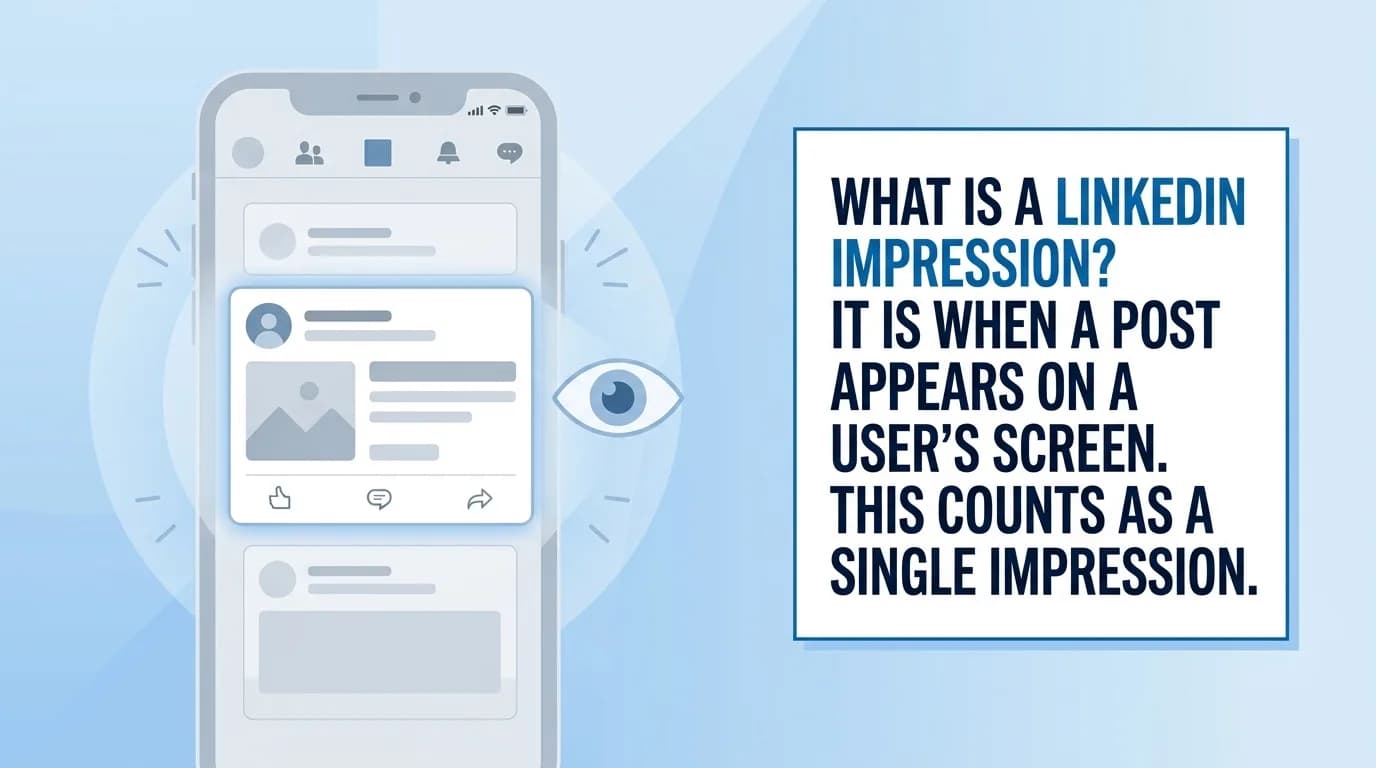
What Is a LinkedIn Impression? (And Why Yours Dropped)
What LinkedIn impressions actually count, impressions vs. reach vs. views, what a good number looks like, why yours dropped, and 7 ways to get more.

LinkedIn Post Formatting: How to Bold Text, Add Line Breaks, and Write Posts People Actually Read
How to bold text in a LinkedIn post (the Unicode workaround and its catch), plus the formatting rules — hooks, line breaks, white space — that drive reach.